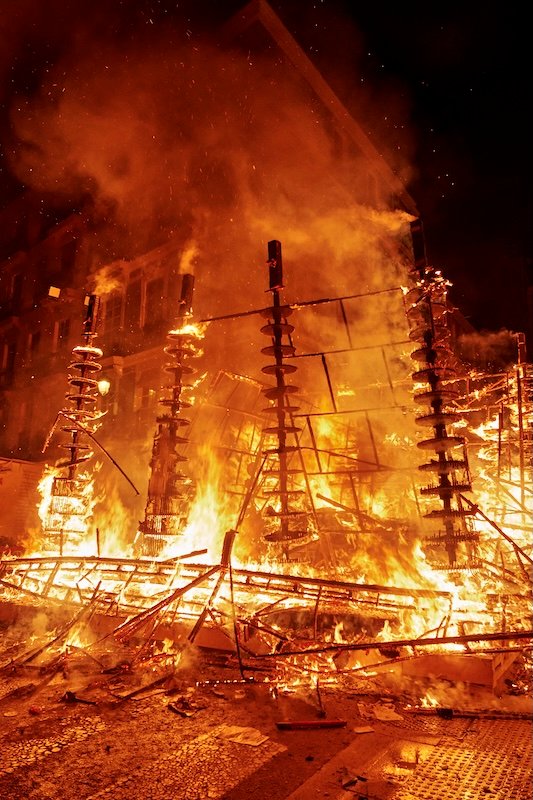
In the heart of Valencia, where tradition and spectacle collide each spring during the Fallas de Valencia, a fleeting architectural gesture rose, only to disappear in flames. Conceived by Spanish artistic duo PichiAvo, Per ofrenar (“To Offer”) was less a structure than a ritual, unfolding over days before completing its life cycle in fire.
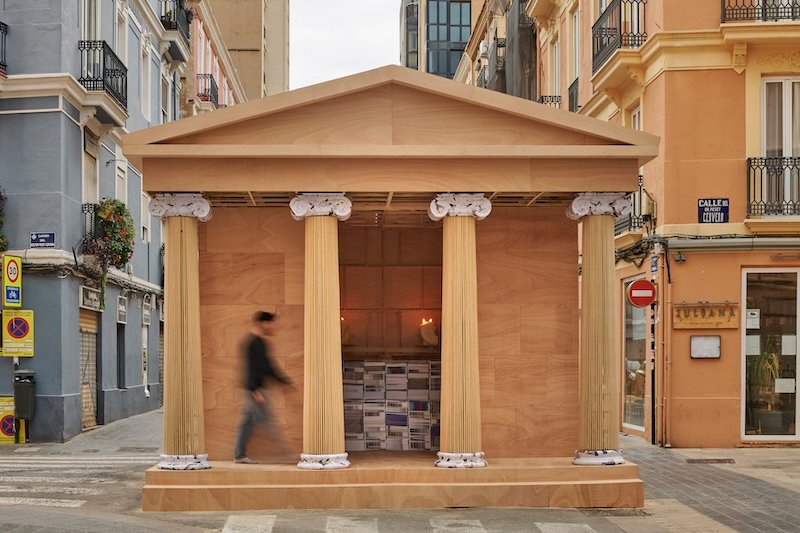
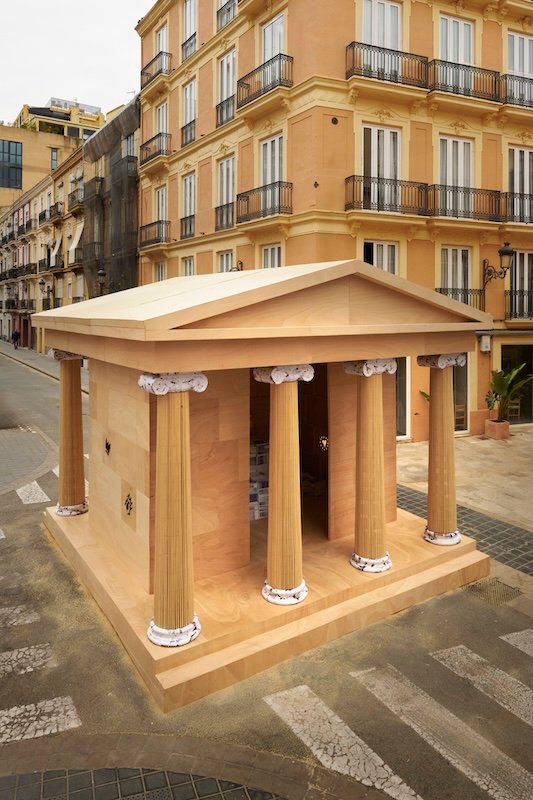
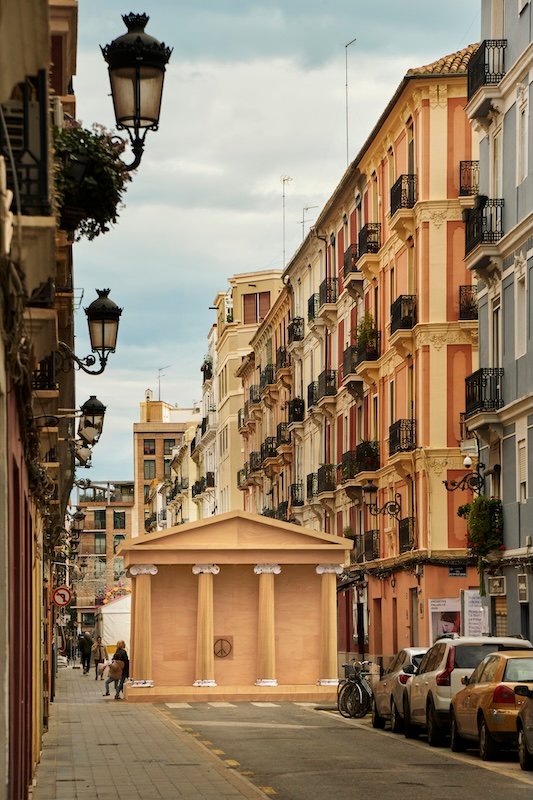
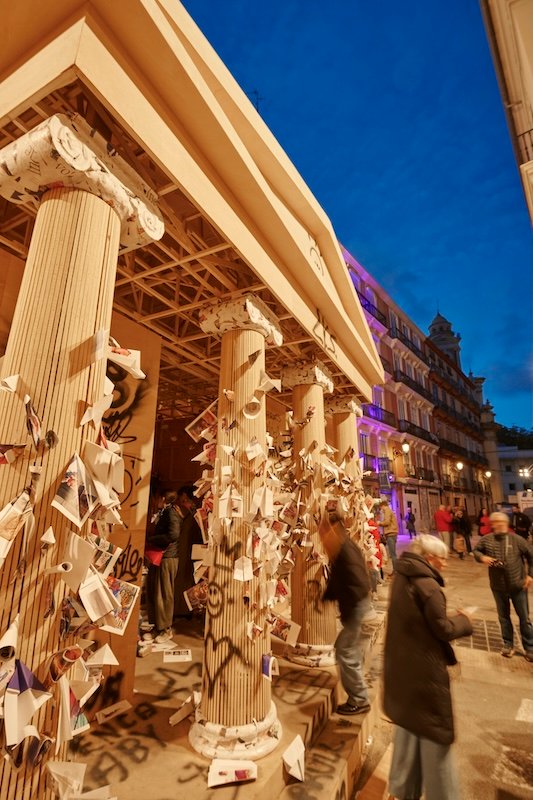
Commissioned by the Borrull-Socors falla and presented within the festival’s Experimental category, the installation stood as a contemporary reimagining of the classical temple. Its form drew directly from the Temple of Athena Nike, a distilled Ionic composition translated into ephemeral materials. Built using traditional fallas techniques: wood, paper, and pigment, the monument resisted the permanence often associated with architectural homage, instead embracing fragility as its defining feature.
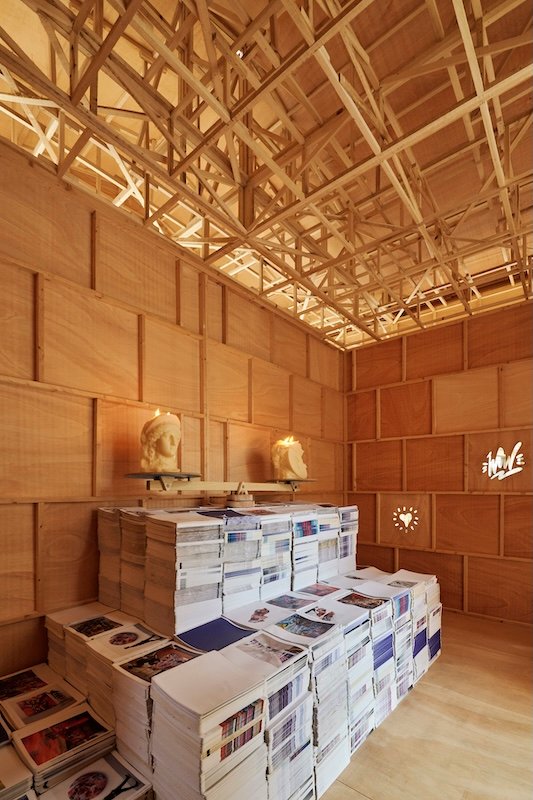
Inside, the temple revealed its conceptual core. An altar, constructed from surplus paper from the duo’s 2024 publication, held a delicately balanced scale. Two sculptural wax candles, crafted in collaboration with the historic Barcelona-based Cerabella, stood in quiet opposition. One represented Classical Art, the other Graffiti. Together, they articulated the central tension of PichiAvo’s practice: a negotiation between antiquity and the immediacy of the street.
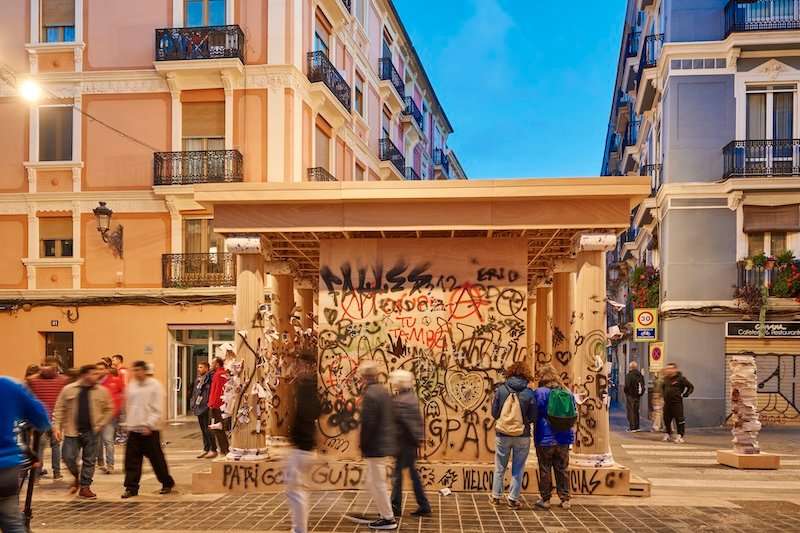
This duality extended beyond symbolism into participation. Over the course of the four-day celebration, visitors became contributors, offering handwritten notes, drawings, and floral tributesea, ch inscribed onto the very surface of the structure. What began as a pristine, temple-like form gradually transformed into a layered palimpsest, echoing the organic evolution of urban walls shaped by graffiti culture.
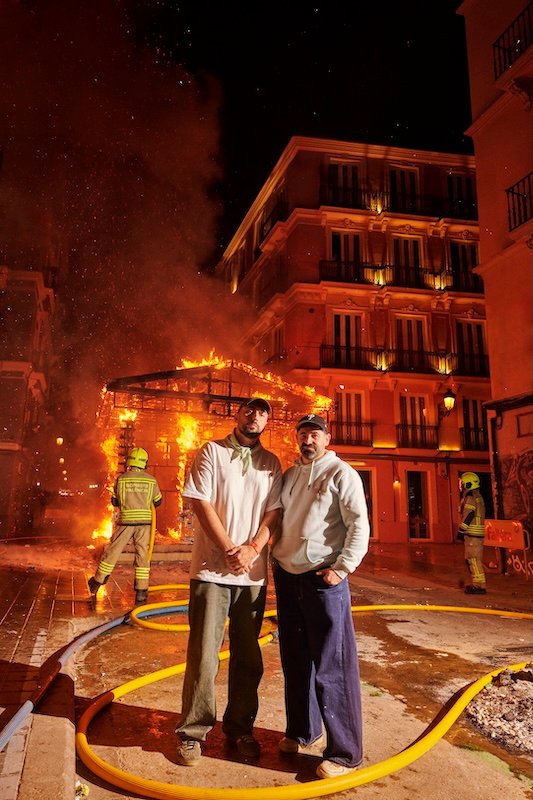
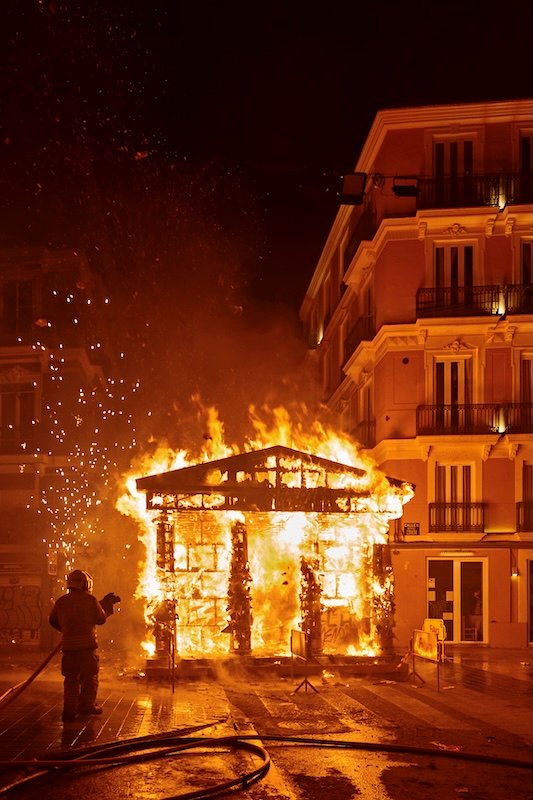
Yet, as with all fallas, permanence was never the intention. On March 19, during the climactic ritual of La Cremà, the monument was set alight. Flames consumed the columns, the altar, and the accumulated marks of its visitors, returning the work to ash in a gesture rooted in centuries-old tradition. What remained was not the object itself, but the memory of its transformation.
Despite its impermanence, Per ofrenar achieved critical recognition, receiving First Prize in the Sustainable Fallas category and Third Prize in the Experimental division, an acknowledgment of both its ecological sensitivity and conceptual clarity.
For Juan Antonio Pichi and Álvaro Avo, the installation represents a continuation of a practice that bridges mythology and modernity. Since forming PichiAvo in 2007, the Valencia-based artists have developed a visual language that merges Greco-Roman iconography with the raw energy of graffiti, appearing everywhere from Miami’s Wynwood Walls to New York’s Houston-Bowery Wall.
With Per ofrenar, that language found perhaps its most poetic expression: a temple not meant to endure, but to be offered: fully, and finally, to the fire.